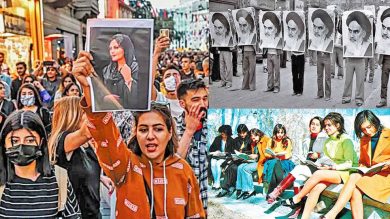
For decades, the Islamic Revolutionary Guard Corps (IRGC) has functioned as a brutal enforcer of Iran’s theocratic regime—controlling prisons, media, morality police, and much of the military and economy. But perhaps its greatest threat has not come from foreign powers or global sanctions. It has come from Iranian women.
Despite the IRGC’s campaigns of censorship, arrest, torture, and murder, women across Iran—from students to mothers, from artists to lawyers—have stood up to power and paid the price. Their courage has shaken the regime to its core and inspired a movement that refuses to be silenced.
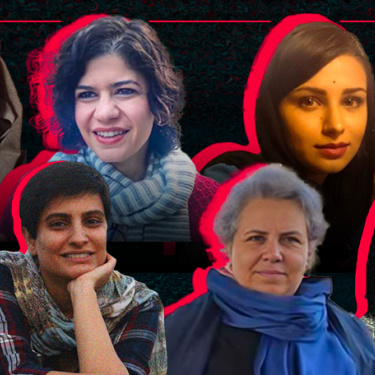
Here, we honor five extraordinary women whose bravery against the IRGC became a spark for millions.
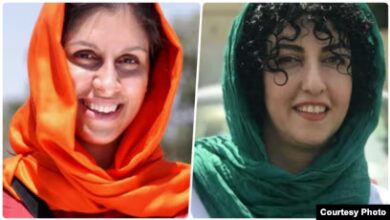
1. Narges Mohammadi: The Voice from Evin Prison
A journalist, human rights activist, and Nobel Peace Prize laureate, Narges Mohammadi has spent years in IRGC-run prisons for exposing torture, executions, and gender-based violence in Iran.
Why She Was Targeted:
• Mohammadi led campaigns against the death penalty and solitary confinement.
• She exposed human rights violations inside Evin Prison, earning the wrath of IRGC intelligence agents.
Her Resistance:
• She wrote secret letters from prison, smuggled to international media, documenting abuse and the psychological warfare used on detainees.
• Despite repeated imprisonments, beatings, and denial of medical care, she refused to sign “confession” letters and never recanted her beliefs.
“They want to break us. But we are not theirs to break.”
Her latest arrest in 2021 only amplified her voice. In 2023, she won the Nobel Peace Prize—for fighting oppression with nothing but her words.
2. Mahsa (Jina) Amini: The Martyr Who Sparked a Revolution
Mahsa Amini, a 22-year-old Kurdish woman visiting Tehran, was arrested by the “morality police”—a unit that operates under IRGC influence—for “improper hijab.” Three days later, she died in custody.
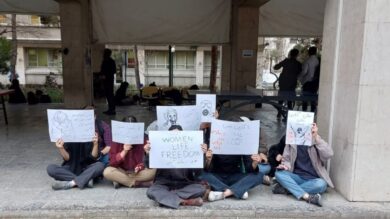
Her death triggered the “Women, Life, Freedom” uprising—one of the largest waves of protests in modern Iranian history.
The Aftermath:
• The IRGC cracked down with deadly force: over 500 people were killed, thousands injured, and more than 20,000 arrested—many tortured or disappeared.
• Despite state violence, women continued to remove their hijabs in public, defying both law and fear.
Mahsa never intended to become a symbol—but her name became a chant that echoed across Iran and the world. From schoolgirls to grandmothers, she unified generations.
“Say her name”—became a defiant cry of remembrance and rage.
3. Nasrin Sotoudeh: The Lawyer Who Defends the Silenced
Nasrin Sotoudeh is one of Iran’s most respected human rights lawyers. She has defended journalists, women who removed their hijab in protest, and minors facing execution—all while being relentlessly targeted by the regime.
Her Resistance:
• Arrested in 2018, she was sentenced to 38 years in prison and 148 lashes—one of the harshest sentences ever given to a woman in Iran for peaceful advocacy.
• While held in Qarchak and Evin prisons, she went on multiple hunger strikes to protest the torture of detainees, prison conditions, and her own denial of legal rights.
Even from behind bars, Nasrin continues to inspire:
• Her letters, written with trembling hands, have been read at international human rights forums.
• Her image holding a rose has become a global symbol of peaceful resistance.
4. Sepideh Gholian: The Journalist Who Broadcasts Truth from a Cell
A labor rights journalist and student activist, Sepideh Gholian was arrested by the IRGC in 2018 for covering a protest by sugarcane workers. She was later re-arrested multiple times, subjected to brutal interrogations, and held for years.
What Makes Her Different:
• She named names—directly accusing IRGC interrogators by name in her letters and videos.
• In 2023, upon her release from prison, she stood outside and chanted:
“Khamenei the murderer, we will bury you.”
Within days, she was re-arrested. But her courage sent shockwaves through Iran and became a viral moment of truth-telling in a country where silence is often forced.
Gholian’s writing from prison is raw, unapologetic, and powerful. Her resistance exposes not just the violence of the IRGC—but its fear of fearless women.
5. Atena Daemi: The Prisoner Who Fought with Poetry
Atena Daemi is a human rights defender and children’s rights activist who was arrested in 2014 and sentenced to 14 years in prison for posting anti-death penalty content on Facebook and distributing leaflets.
IRGC’s Response:
• Atena was tortured, denied medical care, and moved repeatedly between prisons to break her spirit.
• Despite this, she organized hunger strikes and helped document sexual harassment, physical abuse, and political repression inside IRGC-controlled facilities.
Her Art:
• Atena wrote poetry and drew sketches behind bars.
• Her writings were smuggled out and published online, connecting her voice to others resisting the regime.
“Even in chains, I am not voiceless,” she wrote in one of her final letters before her release.
Atena was released in 2022 after international campaigns. But she has not stopped fighting.
A Pattern of Brutality—and Bravery
These women represent thousands more whose names we may never know. The IRGC’s tactics—intimidation, surveillance, smear campaigns, torture, forced confessions—are meant to isolate and silence. But they have backfired.
Women across Iran now:
• Burn hijabs in public squares
• Shave their heads in protest
• Refuse to attend state universities or take part in government-run programs
• Document abuses, even if it means risking everything
The IRGC’s power is real. But so is the power of women who rise despite it.
Why the World Must Listen
The stories of these five women aren’t just testimonies of bravery—they are calls to action.
What can be done:
• Designate the IRGC as a terrorist organization.
• Free political prisoners like Narges, Sepideh, and others.
• Offer asylum and support to exiled activists.
• Amplify their stories across international media.
• Protect digital and physical spaces for women to create, organize, and lead.
Conclusion
In the battle for Iran’s future, women are not only on the frontlines—they are leading the charge. Armed with nothing but words, veils, cameras, and courage, they are confronting one of the most powerful security forces in the Middle East.
Join Our Newsletter!
Stay informed with the latest updates, news, and ways to take action in the fight for justice and global security. Sign up now to get updates delivered straight to your inbox!