In authoritarian societies, art is more than a reflection of culture—it is an act of defiance. Under the rule of the Islamic Revolutionary Guard Corps (IRGC), Iran’s cultural and artistic life has been systematically monitored, censored, and politicized. But history shows that repression often amplifies the creative voice rather than silencing it.
From street murals that bloom overnight in Tehran’s alleyways to underground music recorded in hidden basements, Iranian artists have transformed creativity into a weapon against fear. These acts, though small in scale compared to the IRGC’s vast machinery of control, pierce the regime’s armor by keeping alive alternative narratives, emotional truths, and visions of freedom.
This resource examines how visual art, music, literature, theater, and digital media have become instruments of resistance, the IRGC’s methods for suppressing creative expression, and how Iranian and diaspora artists are working to reclaim cultural space.
I: The IRGC’s Cultural Control Apparatus
1.1 The Ideological Foundation
The IRGC sees culture as a battlefield. Since its formation after the 1979 Islamic Revolution, it has embraced the idea that controlling art and media is essential for preserving ideological dominance.
Through organizations like the Basij Cultural Centers, the IRGC funds pro-regime productions while censoring dissent. They commission propaganda films, sponsor exhibitions glorifying the “Axis of Resistance,” and maintain watchlists of artists whose works deviate from official narratives.
1.2 Mechanisms of Suppression
The IRGC employs a multi-pronged strategy:
• Pre-Production Censorship: Scripts, lyrics, and manuscripts must pass through state approval.
• Surveillance of Creative Spaces: Galleries, theaters, and music venues are infiltrated by informants.
• Legal and Physical Intimidation: Artists face arrest, travel bans, and confiscation of work.
• Economic Control: Access to materials, venues, and permits is contingent on political compliance.
This creates a climate in which public cultural expression is dominated by state-approved voices—yet the persistence of underground art shows that control is never absolute.
II: Visual Art as Silent Subversion
2.1 Street Art and Graffiti
Murals and graffiti, often anonymous, have emerged as the most visible and immediate form of protest. Artists use public walls as canvases for slogans, portraits of political prisoners, and symbolic imagery.
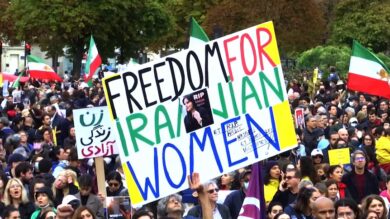
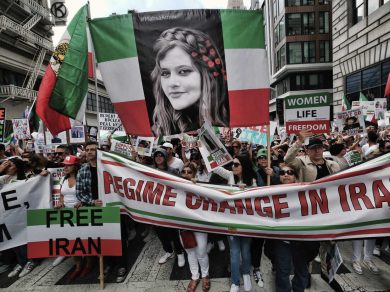
During the 2022 Woman, Life, Freedom protests, stenciled images of Mahsa Amini appeared in multiple cities. These works, rapidly painted and shared online before being erased by authorities, served as visual rallying points.
2.2 Symbolism in Painting and Illustration
Iranian visual artists often employ allegory to evade censorship. A painting of a caged bird, for instance, may be interpreted as a benign pastoral image by censors but read by audiences as a metaphor for political imprisonment.
Artists in exile have taken this further, producing bold works openly criticizing the IRGC’s human rights abuses, and exhibiting them in global galleries to bypass the domestic suppression.
III: Music and Sound as Resistance
3.1 Underground Music
The IRGC heavily restricts music—especially genres like rock, hip-hop, and metal, which it associates with Western influence. Yet underground scenes thrive, recording in hidden studios and distributing tracks online through encrypted platforms.
Hip-hop artists, in particular, have emerged as chroniclers of urban struggle, using sharp Persian wordplay to criticize corruption, repression, and the role of the IRGC in everyday life.
3.2 The Power of Persian Poetry in Song
Even within the censorship system, artists weave resistance into their lyrics by drawing on Iran’s rich poetic tradition.
Classical poets like Hafez and Rumi are used as veiled references for modern struggles—lines about the “wine of truth” or “breaking chains” resonate with audiences who understand their layered meanings.
IV: Literature as a Memory Archive
4.1 Fiction and Memoir
Writers often face the most direct censorship, with manuscripts heavily edited or outright banned. Many circumvent this by publishing abroad or circulating works digitally.
Memoirs by former political prisoners and exiled journalists keep alive the stories the IRGC tries to erase. These narratives preserve collective memory and counter official histories that seek to sanitize the regime’s record.
4.2 Poetry as Protest
Poetry remains deeply embedded in Iranian cultural identity. Modern protest poets embed critiques in subtle metaphors, creating verses that pass censorship but stir defiance in readers.
V: Theater, Cinema, and Performance
5.1 The Stage as a Political Arena
Theater companies—both official and underground—use allegory and historical analogy to comment on current oppression. Plays about ancient kings or mythic heroes often contain veiled critiques of contemporary leaders.
5.2 Cinema Under Pressure
Iran’s film industry is internationally acclaimed, yet directors who deviate from state-approved messaging face bans and exile. Despite this, filmmakers like Jafar Panahi and Mohammad Rasoulof continue to produce critical works, often smuggling films to international festivals where they win awards and global attention.
VI: Digital Media and Global Amplification
6.1 Social Media Artivism
Instagram, Telegram, and X (Twitter) have become essential spaces for sharing protest art, especially when physical galleries are shut down. Artists post illustrations, animated shorts, and collages that can go viral internationally.
6.2 Diaspora Digital Campaigns
Exiled Iranian creatives have built online platforms dedicated to amplifying censored art from inside Iran. Digital exhibitions, online concerts, and hashtag campaigns ensure that art suppressed at home finds an audience abroad.
VII: Risks for Creative Resistance
7.1 Personal Danger
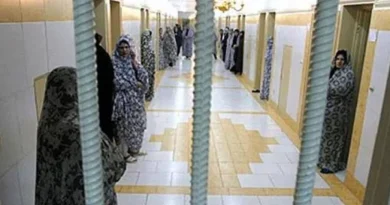
Artists risk imprisonment, torture, or exile. The IRGC has detained painters, musicians, and filmmakers under charges of “anti-regime propaganda” or “collusion with hostile states.”
7.2 Psychological Toll
Working under constant surveillance and threat erodes mental health, leading to burnout or self-censorship.
VIII: International Solidarity and Support
8.1 Role of Cultural Institutions Abroad
Museums and cultural organizations can act as safe havens for Iranian artists in exile, providing platforms to display their work free of censorship.
8.2 Funding and Infrastructure
Grants for at-risk artists, secure distribution channels for banned works, and international collaborations help sustain creative resistance over time.
Conclusion
The IRGC’s military power is immense, but its cultural vulnerability lies in the fact that art speaks to the human spirit in ways repression cannot fully silence. Every banned painting, hidden poem, underground concert, or smuggled film represents an act of survival and defiance.
Join Our Newsletter!
Stay informed with the latest updates, news, and ways to take action in the fight for justice and global security. Sign up now to get updates delivered straight to your inbox!