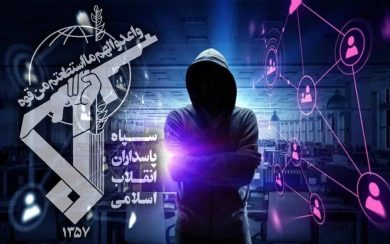
Most people understand the Islamic Revolutionary Guard Corps (IRGC) as a military and security apparatus—but few recognize its secretive empire of front companies, shadow financiers, and shell entities that sustain its power. These hidden networks funnel billions from oil, construction, banking, and even agriculture to fund repression at home and proxy wars abroad.
This analysis exposes the IRGC’s covert economic networks—unmasking key front companies, business sectors, and shell entities that keep its empire alive. Understanding and disrupting these structures are essential to cutting off IRGC funding and restoring accountability.
1. Why Front Companies Matter
Front companies allow the IRGC to:
• Evade sanctions by concealing ownership and swapping identities
• Launder money across borders using shell corporations
• Fund proxies (Hezbollah, Houthis, militias in Iraq)
• Dominate domestic economy through no-bid state contracts
These companies operate invisibly—yet their financial flows are the bloodstream that sustains Iran’s military-intelligence apparatus.
2. Oil Smuggling Networks: Ghost Fleets & Shell Brokers
2.1 Ghost Fleets & Tanker Networks
By coordinating ship-to-ship transfers and operating with stealth tankers, the IRGC manages nearly 50% of Iran’s oil exports—equivalent to $25 billion annually via clandestine routes .
2.2 Shell Companies in Hong Kong & China
• China Oil & Petroleum Co Ltd (Hong Kong) channeled over $2 billion through U.S. banks to pay for IRGC oil .
• Xin Rui Ji Trading Ltd, a Hong Kong shell tied to the IRGC-linked Sepehr Energy Jahannama Pars, falsifies documents to conceal oil origin .
These entities mask oil sales to China, Russia, and Syria—bypassing international restrictions.
3. Construction & Infrastructure Monopolies
3.1 Khatam al-Anbiya Construction HQ
The IRGC’s giant engineering consortium controls at least 812 subsidiaries, including megaprojects like metro, dams, and pipelines .
Contracting through this entity ensures IRGC profited from national infrastructure at public expense.
3.2 Telecom & Bank Takeovers
• Pasargad Bank, majority-owned by IRGC-linked Saman Majd Investment (reports link it directly to Pasdaran) .
• Through privatization, telecom giant TCI was partially sold to IRGC-affiliated consortiums like Tose’e Etemad, Shahriar Mahestan, and Mobin Electronic .
These moves secure IRGC’s control over finance and communications, deepening its reach into civilian life.
4. Shadow Finance & Informal Banking
4.1 Black-Market Currency Exchanges
The Zarringhalam family runs currency exchange houses like Zarrin Tehran Investment Co, facilitating sanctioned transactions .
4.2 Front Banks & Hawala Networks
• Ansar Bank and Reconstruction Organization of Holy Shrines in Iraq (ROHSI) act as conduits for IRGC-QF funding and cross-border trades .
• A tangled web of Iraqi and UAE front companies laundered military funds—critical to IRGC-linked drone and proxy operations .
This empowers off-the-books transactions that evade oversight.
5. Weaponization of Civilian Firms
5.1 Drone & Aerospace Producers
• Mado manufacturer (IRGC brigadier on board) produces drone engines used in assassinations—designated under U.S. policy .
• Shahed Aviation Industries builds military UAVs integral to IRGC-QF strategy .
These firms blur lines between civilian enterprise and direct military use.
5.2 Modafl’s Sahara Thunder
The Sahara Thunder front orchestrated drone sales to Russia and Ukraine, key to IRGC’s global military design .
6. Port Operations & Shipping Fronts
• Tidewater Middle East Co, once IRGC-owned, handles port logistics for Bandar Abbas and naval shipments .
• UAE-based firms like Bright Moon General Trading, Sky Leopard, and Green Galaxy route payments through IRGC-affiliated airlines and shipping lines .
These logistics hubs are crucial to moving both sanctioned goods and military equipment.
7. Proxy Funding via Religious & Cultural Institutions
• ROHSI, a religious foundation near Quds Force, funneled funds to front companies like Bahjat al Kawthar in Iraq—backing militias .
• Religious entity donations mask IRGC funding—exploiting faith-based cover and trust.
These opaque channels blur charity and military funding.
8. Crypto and Modern Evasion
• IRGC exploits cryptocurrency for sanctions evasion
• Water, agriculture, and food sectors, through IRGC-backed firms, profiteer off inflation and subsidized trade .
Digital currencies and complex trade networks add layers of secrecy to the IRGC’s finances.
9. Why This Matters: Implications & Solutions
9.1 Global Accountability Risks
Unmasking front companies empowers:
• Sanctions targeting
• Legal filings under universal jurisdiction
• Blocking financial channels across DUI banks
9.2 Challenges
• IRGC uses formal-legal cover for acquisitions
• Many businesses are dual-use or part of large Chinese networks
• Sanction evasion is dynamic and decentralized
9.3 Strategy
• Expand designations targeting front companies
• Enforce corporate transparency requirements
• Coordinate multi-national investigations
• Track drone and oil revenues into proxy conflicts
Conclusion
The IRGC isn’t just a military wing—it’s an economic behemoth hiding behind front companies, shell firms, and illicit networks. To dismantle its empire requires exposing these fronts, enforcing coordinated sanctions, prosecuting through universal jurisdiction, and cutting off their financial arteries completely.
Only by shining light on the hidden fronts can global justice truly succeed—and weaken the regime’s capacity to terrorize at home and abroad.
Join Our Newsletter!
Stay informed with the latest updates, news, and ways to take action in the fight for justice and global security. Sign up now to get updates delivered straight to your inbox!