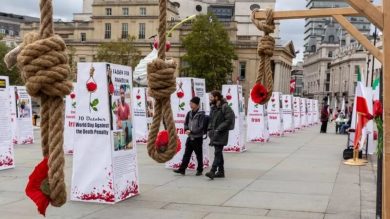
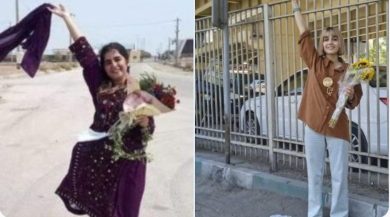
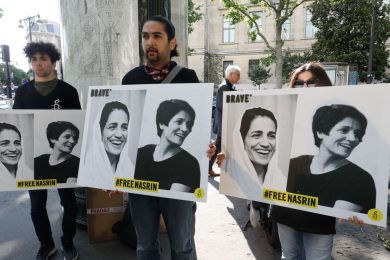
The Iranian regime wants us to believe that it controls the narrative. That dissent is local, fragmented, and ultimately futile. But the truth is louder than censorship, stronger than prisons, and more global than the IRGC’s reach. From Tehran’s streets to Toronto’s rallies, from Berlin’s refugee art galleries to Sydney’s activist hubs, the Iranian diaspora is rewriting the rules of resistance.
What began as heartbreak and exile is now a transnational, coordinated, and increasingly effective movement that threatens the legitimacy—and longevity—of the Islamic Revolutionary Guard Corps (IRGC) and its grip on power.
This is a story of courage beyond borders. This is how the diaspora fights back.
I. Trauma, Exile, Awakening
Most Iranians living abroad carry scars—some visible, some silenced. Many were pushed out by war, repression, or the economic suffocation that defines life under IRGC rule. Others fled targeted harassment, arrests, and threats for daring to speak, dance, write, or organize.
For years, this trauma remained isolated. Diaspora communities struggled with alienation, surveillance, and the fear of speaking out.
That changed in 2009—and was transformed forever in 2022.
The Turning Point: Mahsa Amini’s Death
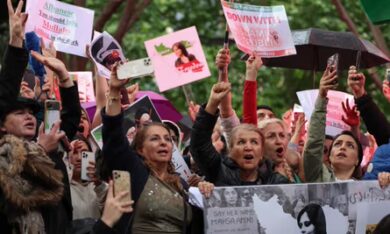
The murder of Mahsa Amini by the morality police ignited the largest global wave of Iranian solidarity in decades. For the diaspora, it was personal—and political. It wasn’t just about a woman in Tehran; it was about mothers, sisters, and daughters in Stockholm, New York, and Vancouver who could no longer be silent.
Suddenly, exile became empowerment.
II. From Mourning to Movement
The protests that erupted across global capitals weren’t just symbolic. They were strategic.
• Mass rallies in Paris, Berlin, and Washington, D.C. united tens of thousands.
• Digital campaigns like #MahsaAmini and #WomanLifeFreedom trended worldwide.
• Pressure on Western governments resulted in new sanctions, debates over terrorist designation for the IRGC, and increased media coverage.
Iranian activists in the diaspora began forming coalitions:
• Lawyers collaborated to file universal jurisdiction cases against IRGC officials.
• Human rights defenders created databases of victims and arrests inside Iran.
• Tech-savvy youth launched VPN networks, bot detection systems, and counter-disinformation channels.
The message was clear: this isn’t charity activism. This is coordinated resistance.
III. Art as Activism
From exile, artists became warriors of memory and defiance.
• “Woman, Life, Freedom” murals appeared across Europe.
• Diaspora filmmakers documented protestors smuggling footage from inside Iran.
• Musicians released protest anthems from afar, giving voice to those silenced back home.
These works did more than raise awareness—they created a cultural front that challenged the IRGC’s attempts to whitewash its crimes.
Art became archive. Creativity became counterpower.
IV. The Legal Arsenal: Taking the IRGC to Court
One of the diaspora’s most powerful tools is international law.
Legal teams in Sweden, Germany, Canada, and the UK are now:
• Filing universal jurisdiction lawsuits against IRGC commanders.
• Pushing for IRGC designation as a terrorist entity in multiple countries.
• Partnering with survivors to collect testimonies, evidence, and forensic documentation.
This legal offensive is slow—but strategic. It moves the battle from hashtags to courtrooms. It proves that justice is not only possible—it’s already underway.
V. Women Leading the Charge
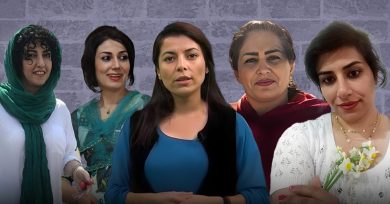
Across every sector of the diaspora resistance, women are leading.
• In journalism, women expose IRGC crimes with rigor and courage.
• In law, they represent prisoners, file suits, and speak at the UN.
• In digital spaces, they mobilize communities, amplify underground voices, and train others in digital security.
This is not accidental. Women have always been at the forefront of Iranian resistance—inside and outside Iran. The diaspora simply reflects that historic reality.
And in doing so, it models what a post-IRGC Iran could look like: inclusive, equal, and defiant.
VI. Disinformation, Surveillance, and the IRGC Abroad
The IRGC knows the diaspora is dangerous. That’s why they’ve invested heavily in:
• Surveillance of Iranian communities abroad
• Smear campaigns and troll farms targeting prominent activists
• Assassination plots and abduction attempts (e.g., Masih Alinejad)
Despite this, diaspora resistance continues to grow. Activists use:
• Encrypted messaging
• Digital counter-intelligence tools
• International protection programs
The IRGC fears the diaspora because it is the one community it can’t fully silence.
VII. Unity in Diversity: A Global Network of Change
The Iranian diaspora is not homogenous. It spans generations, ideologies, and languages. But increasingly, it is unified by one mission: an Iran without the IRGC.
New alliances are forming between:
• Monarchists and republicans
• Leftists and centrists
• Religious minorities and secular voices
This is not about creating a utopia—it’s about creating a frontline strong enough to confront the world’s most entrenched theocratic militia.
The diaspora is building a resistance that transcends identity politics and focuses on one common enemy: the IRGC’s system of fear.
VIII. What the World Can Learn
Iran’s global resistance offers a model for others facing authoritarian regimes.
• It proves the power of exile as resistance.
• It demonstrates that art and law can work together.
• It challenges the West’s inaction and calls for moral clarity.
This movement doesn’t need saviors. It needs solidarity, platforms, and legal tools.
Governments must:
• Sanction the IRGC comprehensively
• Offer protections to Iranian dissidents abroad
• Stop enabling IRGC-linked business through loopholes
Silence is complicity. Diaspora Iranians are demanding action—and accountability.
IX. The Next Front: Rebuilding the Future
The diaspora isn’t just resisting—it’s planning. Iranian academics, policy experts, economists, and human rights scholars are already envisioning:
• A post-IRGC economy
• A civil-led constitution
• A truth and reconciliation commission
From exile, they are planting the seeds for a future Iran that is free, pluralistic, and just.
Conclusion
From Tehran to Toronto, Berlin to Brisbane, Iranians are proving that geography does not define resistance—conviction does.
Diaspora voices are more than echoes—they are the amplifiers of revolution. They preserve truth, challenge lies, and fight for every protestor whose scream was swallowed by Evin Prison.
Join Our Newsletter!
Stay informed with the latest updates, news, and ways to take action in the fight for justice and global security. Sign up now to get updates delivered straight to your inbox!