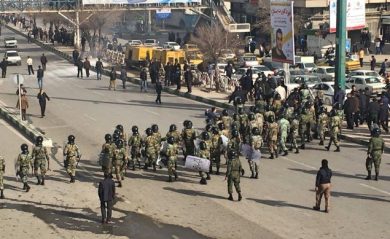
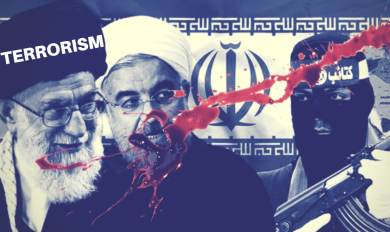
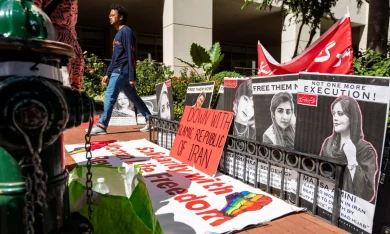
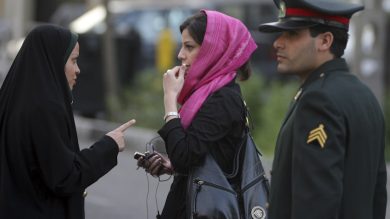
In the Islamic Republic of Iran, standing up to the Islamic Revolutionary Guard Corps (IRGC) is not just an act of protest—it’s an act of extraordinary bravery. The IRGC, with its Basij paramilitary arm, enforces the regime’s ideological rule, often through violent crackdowns on women’s rights, freedom of speech, and political dissent. Yet, countless women—students, workers, journalists, mothers—have risked imprisonment, torture, and even death to challenge this machinery of repression.
This article documents the stories of women who have faced the IRGC head-on, from the streets of Tehran to the prisons of Qarchak and Evin, and who have inspired a movement that refuses to be silenced.
1. Mahsa Amini: The Spark of a Revolution
The Arrest
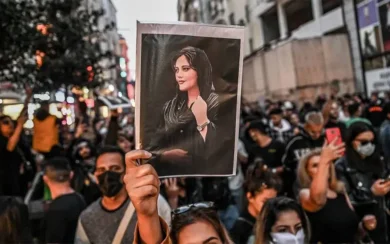
In September 2022, 22-year-old Mahsa Amini was arrested by the “morality police” (Gasht-e Ershad), a unit under the indirect control of the IRGC. Her alleged crime: “improper hijab.”
The Aftermath
Mahsa’s death in custody—officially claimed as a “heart attack,” but widely believed to be the result of beatings—ignited the Woman, Life, Freedom uprising. Her name became a rallying cry not only in Iran but worldwide.
Legacy
Her story mobilized millions, inspiring mass protests in over 80 cities. Women burned their hijabs in public, directly defying the IRGC’s enforcement of gender apartheid.
“They tried to silence her, but they made her voice eternal.”
2. Narges Mohammadi: Defiance From Behind Bars
Who She Is
A veteran human rights activist and journalist, Narges Mohammadi has spent much of the past decade in and out of prison for advocating against the death penalty and for women’s rights.
Her Resistance
Even from inside Evin Prison, she has smuggled letters detailing torture, solitary confinement, and sexual abuse of female detainees—often at the hands of IRGC-controlled wardens.
Global Recognition
In 2023, she was awarded the Nobel Peace Prize for her “fight against the oppression of women in Iran and her fight to promote human rights and freedom for all.”
3. Atena Daemi: The Voice Against Executions
Background
Atena, a children’s rights activist, became a prominent voice against Iran’s death penalty system—particularly for minors.
Arrest and Imprisonment
The IRGC arrested her in 2014, charging her with “propaganda against the state” and “insulting the Supreme Leader.” Her “crimes” included peaceful protests and Facebook posts.
In Prison
Atena endured beatings, hunger strikes, and denial of medical treatment. She used hunger strikes as a weapon to demand justice for herself and fellow prisoners.
4. Sepideh Gholian: From Farm Worker to Political Prisoner
Early Activism
Sepideh, a labor rights activist, was arrested for reporting on protests by sugarcane workers in Haft Tappeh, exposing corruption and exploitation.
Defiance
After her arrest, she used every opportunity—court appearances, letters smuggled from prison—to denounce the IRGC’s torture and intimidation.
Current Status
Sepideh remains a symbol of intersectional struggle: women’s rights, labor rights, and freedom of expression.
5. Nasrin Sotoudeh: The Lawyer for the Voiceless
Who She Represents
As a human rights lawyer, Nasrin defended journalists, activists, and women arrested for removing their hijabs in public.
IRGC Retaliation
She was sentenced to decades in prison on multiple charges, including “encouraging corruption and prostitution” (code for advocating women’s dress freedom).
Her Message
Even in prison, Nasrin continues to call for civil disobedience and international pressure against the IRGC’s abuses.
6. Women of Baluchistan and Kurdistan: Resistance at the Margins
Context
Ethnic minority women—particularly Baluch and Kurdish Iranians—face double oppression: ethnic discrimination and gender-based violence.
Notable Acts
In Zahedan, Baluchi women have led protests after mosque massacres; in Sanandaj and Mahabad, Kurdish women have organized underground networks to protect demonstrators from IRGC raids.
These acts rarely make headlines but represent some of the most courageous defiance in Iran today.
7. The Digital Warriors
Not all defiance happens in the streets—some women fight the IRGC in cyberspace.
Examples
• Masih Alinejad runs campaigns like My Stealthy Freedom and White Wednesdays, encouraging women to share photos and videos defying hijab laws.
• Anonymous women-run Telegram channels distribute protest footage, risking cyber-tracking by IRGC intelligence.
8. Artistic Resistance
Artists have also been targeted for their defiance:
• Shervin Hajipour’s song “Baraye,” based on tweets about why Iranians protest, went viral with women’s voices leading the chorus of change.
• Women photographers document unveiled protesters and smuggle their work abroad.
Art becomes a weapon that the IRGC cannot easily confiscate.
9. Costs of Defiance
Standing up to the IRGC often comes at a devastating cost:
• Imprisonment in facilities like Qarchak and Evin, notorious for torture and sexual abuse.
• Exile, forcing many to leave behind families and careers.
• Death, as in the case of Hadis Najafi, shot during protests.
And yet, women continue to stand.
10. Global Solidarity
International support is crucial:
• Pressure for IRGC designation as a terrorist entity.
• Advocacy for political prisoners, demanding their release.
• Platforms for Iranian women’s voices, from UN panels to art exhibitions.
When global attention intensifies, the IRGC’s impunity weakens.
Conclusion
The women who stand up to the IRGC know the risks. Yet they persist—because they are fighting for more than themselves. They are fighting for every Iranian girl who dreams of freedom, every mother who refuses to be silent, and every future where life, liberty, and dignity are non-negotiable.
Join Our Newsletter!
Stay informed with the latest updates, news, and ways to take action in the fight for justice and global security. Sign up now to get updates delivered straight to your inbox!