The Islamic Revolutionary Guard Corps (IRGC) is one of the most powerful and opaque forces in the Middle East. Originally established to safeguard Iran’s 1979 Islamic Revolution, the IRGC has since evolved into a sprawling military, political, and economic powerhouse—acting as a “state within a state.” This article offers a foundational guide to understanding the IRGC’s history, structure, operations, and global impact—and why international accountability is urgently needed.
1. Birth of the IRGC: Protecting a Revolution, Not a Nation
The IRGC was formed in May 1979 by Ayatollah Ruhollah Khomeini as an ideological counterweight to Iran’s regular army, which he feared might remain loyal to the old regime. Its original purpose was to protect the revolution from internal enemies. However, it quickly grew into an all-encompassing force that polices not only dissent but also ideology, faith, and foreign policy.
2. Structure: A Parallel State
Unlike Iran’s regular military (Artesh), the IRGC reports directly to the Supreme Leader, not to the president or parliament. It consists of:
• Ground Forces: For internal security and border control.
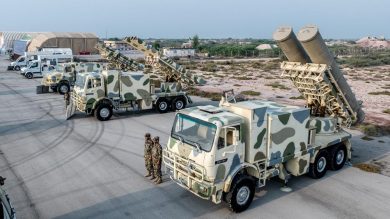
• Aerospace Force: Manages Iran’s ballistic missile program and drone operations.
• Navy: Operates in the Persian Gulf and Strait of Hormuz with a focus on asymmetric naval warfare.
• Quds Force: Conducts extraterritorial operations and supports proxy militias abroad.
• Basij Militia: A volunteer paramilitary force known for repressing protests and enforcing morality laws.
Together, these branches make the IRGC a military, intelligence, and ideological apparatus unlike any other in the world.
3. Political Influence: Guardians of Theocracy
The IRGC plays a dominant role in Iran’s domestic politics. Many of Iran’s top politicians—including former presidents and ministers—are former IRGC commanders. It has the power to disqualify political candidates, suppress voter turnout, and control state media narratives. The IRGC is not merely a military actor; it’s a theocratic enforcer.
4. Economic Empire: Who Really Owns Iran
The IRGC controls an estimated 30–50% of Iran’s economy through front companies, foundations (bonyads), and construction conglomerates such as Khatam al-Anbiya, which is involved in everything from oil extraction to dam building.
Sanctions haven’t always hindered the IRGC—in many cases, they’ve helped it consolidate wealth. The regime often bypasses international sanctions using IRGC-controlled smuggling routes, black-market sales, and shell companies abroad.
5. The Quds Force: Exporting the Revolution
The IRGC’s Quds Force functions as the regime’s foreign arm for proxy warfare and influence. It has trained, armed, and funded militant groups including:
• Hezbollah (Lebanon)
• Hamas and Islamic Jihad (Palestinian Territories)
• Houthis (Yemen)
• Kataib Hezbollah and PMF militias (Iraq)
• Syrian regime forces
These groups are used to expand Iran’s regional reach, destabilize adversaries, and deter Western intervention. The Quds Force operates in secrecy, often embedded in conflict zones with plausible deniability.
6. The Basij: Policing Morality and Dissent
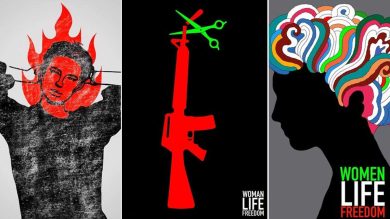
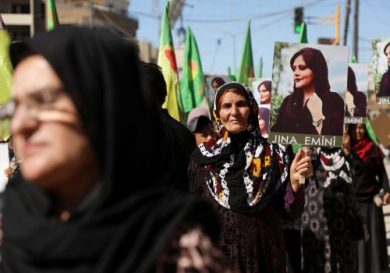
The Basij are the IRGC’s domestic shock troops. Infamous for beating, arresting, and killing protesters, the Basij are deeply involved in quelling civil unrest—from the 2009 Green Movement to the 2022 “Woman, Life, Freedom” uprising.
They patrol universities, monitor social media, and conduct raids on homes for violations of Islamic law. Their victims include students, women, labor activists, and even children.
7. Human Rights Violations: A Trail of Blood
Numerous reports by organizations like Amnesty International and Human Rights Watch document the IRGC’s systemic use of:
• Torture and rape in prisons
• Mass arrests during protests
• Enforced disappearances
• Executions after sham trials
Evin and Fashafuyeh prisons—controlled in part by the IRGC—are notorious for solitary confinement, psychological torture, and abuse.
8. Cyber Warfare: The Digital Guards
The IRGC’s cyber division engages in surveillance, censorship, disinformation, and hacking. It has been linked to:
• Cyberattacks on Israeli infrastructure
• Surveillance of Iranian activists abroad
• Manipulation of social media platforms
• Threats and doxxing campaigns against dissidents
Online, the IRGC operates like a digital dictatorship, controlling internet access and targeting VPNs to crush digital dissent.
9. International Terrorism & Designations
The IRGC is officially designated as a terrorist organization by:
• United States (2019)
• Canada (2024)
• Bahrain, Saudi Arabia, Sweden, and others
The Quds Force has been linked to bombings, assassination plots, and terror funding from Latin America to Europe. Yet, many Western countries continue to treat the IRGC as a legitimate state institution—giving it cover and access to global financial systems.
10. Why the World Must Care
The IRGC isn’t just an Iranian problem:
• Middle Eastern stability is compromised by its proxy wars.
• Global security is threatened by its terrorism and cyber campaigns.
• Human rights and women’s rights suffer under its repression.
• Diaspora communities live in fear of surveillance and threats from IRGC operatives abroad.
11. Resistance and Hope
Despite the IRGC’s power, Iranians continue to resist:
• Women are leading mass protests and removing their hijabs despite brutal crackdowns.
• Youth are organizing online and offline to challenge authoritarianism.
• Diaspora activists are documenting crimes, filing lawsuits, and pressuring foreign governments.
Every act of resistance—every protest, every courtroom battle, every article—is a step toward dismantling the IRGC’s grip.
12. What You Can Do
• Support designation efforts in your country.
• Boycott IRGC-linked companies and products.
• Amplify voices of Iranian activists and survivors.
• Push for universal jurisdiction cases to hold IRGC officials accountable.
• Call out Western complicity—from banks to governments to media.
Conclusion
The IRGC is a multilayered threat: military, economic, ideological, and criminal. It endangers not just Iran’s future but global peace and human rights. Understanding it is the first step. Acting against it is the next.
Join Our Newsletter!
Stay informed with the latest updates, news, and ways to take action in the fight for justice and global security. Sign up now to get updates delivered straight to your inbox!