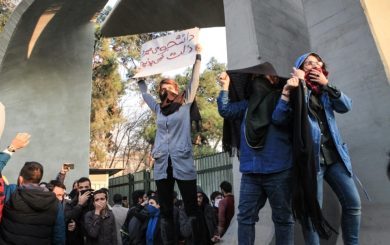
In Iran today, women stand at the center of resistance against the Islamic Republic’s oppressive system. Their courage, influence, and refusal to submit threaten the very core of the regime’s ideology. This is why the Islamic Revolutionary Guard Corps (IRGC) — the regime’s main enforcement arm — relentlessly targets female leaders, activists, and journalists.
The IRGC’s fear of women is not just symbolic; it is strategic. Women embody an alternative vision of Iran’s future — a future of equality, freedom, and democracy. They challenge the regime’s authority by refusing to accept second-class status, and in doing so, they inspire millions.
This article examines:
• Why the IRGC views women as a primary threat.
• How female leadership challenges the Islamic Republic’s power structure.
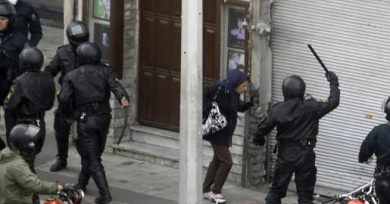
• The tactics used by the IRGC to suppress women.
• Why Iran’s female leaders are critical to the country’s democratic future.
1. Why the IRGC Fears Women Leaders
A. Women Represent Defiance Against Totalitarian Control
The Islamic Republic’s authority is built on controlling every aspect of life — and for women, that control is even more intimate.
• Compulsory hijab laws, restrictions on public behavior, education limits — these aren’t just policies; they are instruments of daily domination.
• Women refusing to comply — by unveiling in public, protesting gender laws, or leading civil movements — shatter the illusion of control.
The IRGC recognizes that every act of defiance by a woman inspires others, turning personal rebellion into political resistance.
B. Women Undermine the Regime’s Ideology
The Islamic Republic relies on a patriarchal ideology to justify its rule. According to this system:
• Women are expected to be submissive, obedient, and silent.
• Their primary roles are domestic — as mothers and wives under male authority.
When women demand equality, fight for leadership, and refuse to be silenced, they directly attack the ideological foundation of the regime.
C. Women’s Movements Are Difficult to Demonize
The regime often frames protests as foreign plots orchestrated by the West.
• However, women’s demands for dignity and basic human rights are harder to dismiss.
• They transcend politics and resonate with both conservative and reformist sectors of society.
The IRGC understands that women’s leadership can bridge political divides, uniting the population against the state.
2. How Women Leaders Challenge the Regime
A. Redefining National Identity
Iranian women are redefining patriotism — no longer tied to obedience to the state but to justice, freedom, and human dignity.
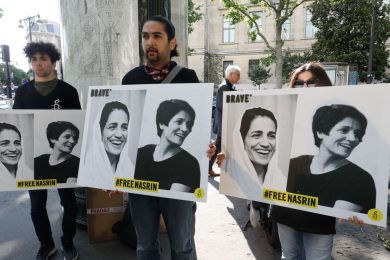
• Activists like Narges Mohammadi and Nasrin Sotoudeh represent an Iran rooted in human rights, not authoritarian control.
This new national identity, centered on individual rights and equality, is deeply threatening to the IRGC’s narrative.
B. Mobilizing Mass Resistance
Women are not only protesting individually — they are organizing mass movements:
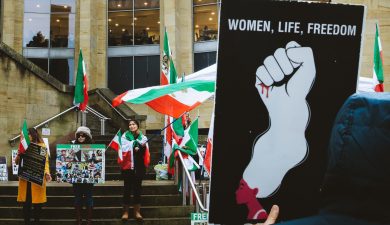
• From “Girls of Revolution Street” protests against compulsory hijab to the “Women, Life, Freedom” uprising sparked by Mahsa Amini’s death,
• Women have turned personal oppression into collective resistance, building networks of solidarity that the regime struggles to crush.
C. Inspiring Global Solidarity
Iranian women’s resistance has captured global attention.
• The IRGC fears international pressure as it weakens the regime’s legitimacy.
• When images of women unveiling, marching, and chanting for freedom spread worldwide, they ignite global support for change in Iran.
3. Tactics the IRGC Uses to Silence Female Leaders
A. Arrests and Imprisonment
The IRGC frequently detains female journalists, activists, and students under vague charges like:
• “Propaganda against the system”
• “Acting against national security”
• “Promoting Western values”
Examples include:
• Narges Mohammadi, imprisoned for exposing human rights abuses.
• Nasrin Sotoudeh, sentenced to decades in prison for defending women’s rights.
B. Torture and Sexual Abuse
Inside IRGC-controlled prisons such as Evin and Qarchak, women face:
• Physical torture (beatings, electric shocks)
• Psychological abuse (threats to their families)
• Sexual violence as a weapon of humiliation and control
Such brutal tactics aim to break the spirit of female leaders and deter others from following their example.
C. Forced Confessions and Public Smearing
• The IRGC forces confessions under torture and broadcasts them on state TV to discredit activists.
• Women leaders are labeled as “agents of the West”, “immoral,” or “corrupt” to destroy their public image.
D. Digital Repression
The IRGC uses cyber surveillance and internet shutdowns to:
• Track activists’ online activity.
• Prevent the spread of protest footage.
• Silence women leading digital resistance campaigns.
Yet Iranian women have become masters of digital evasion, using encrypted apps and foreign media outlets to stay connected.
4. Profiles in Courage: Women the IRGC Fears Most
A. Narges Mohammadi
• Human rights advocate and Nobel Peace Prize laureate.
• Despite repeated arrests and severe health deterioration, she continues to write, organize, and speak out from behind bars.
B. Nasrin Sotoudeh
• Human rights lawyer known for defending women who refused to wear the hijab.
• Sentenced to 38 years and 148 lashes, a punishment meant to serve as a warning but instead inspired global outrage.
C. Sepideh Gholian
• A young journalist imprisoned for reporting on labor protests.
• Upon release, she stood outside Evin Prison and shouted anti-regime slogans, showing that fear would not silence her.
D. Masih Alinejad
• Exiled journalist leading the #MyStealthyFreedom campaign, encouraging women to post hijab-free photos.
• Survived assassination and kidnapping attempts by the IRGC, showing the global reach of the regime’s fear.
5. Why Women Will Shape Iran’s Future
A. They Represent a Moral Revolution
The women’s movement is not only about gender—it’s about human dignity, freedom of choice, and civil rights.
B. Their Leadership is Authentic
Unlike political figures tied to the regime’s history, women’s leaders come from grassroots movements, grounded in the people’s real struggles.
C. Their Fight is Intersectional
Iranian women’s struggle links with other forms of oppression—ethnic, economic, religious—building a broad, inclusive movement for freedom.
Conclusion: Women Are the Regime’s Greatest Fear and Iran’s Greatest Hope
The IRGC targets women because it understands their power.
• Women expose the regime’s lies.
• Women unite divided sectors of society.
• Women inspire not just Iranians, but the world.
Despite arrests, torture, and slander, Iranian women remain the regime’s greatest threat — and the nation’s greatest hope.
Join Our Newsletter!
Stay informed with the latest updates, news, and ways to take action in the fight for justice and global security. Sign up now to get updates delivered straight to your inbox!