Iran’s economic struggles are often blamed on foreign sanctions, global oil prices, or mismanagement. But a deeper, more systemic factor drives the country’s financial crisis: the stranglehold of the Islamic Revolutionary Guard Corps (IRGC). This military, political, and economic powerhouse has transformed itself into Iran’s most powerful conglomerate, controlling industries from oil and construction to telecommunications and banking.
While the IRGC thrives, ordinary Iranians bear the cost—through inflation, unemployment, and a lack of economic freedom. This resource guide maps out the IRGC’s economic empire, reveals how it exploits sanctions, and explains how its dominance impoverishes the nation.
1. From Soldiers to Tycoons: How the IRGC Built Its Economic Empire
The IRGC’s economic journey began in the late 1980s, after the Iran-Iraq War. The government tasked it with reconstruction projects, granting it no-bid contracts and unrestricted access to state resources. From there, it:
• Expanded into every major sector—energy, construction, shipping, banking, agriculture, and manufacturing.
• Used front companies and shell corporations to mask its involvement.
• Leveraged its political clout to sideline competitors and secure monopolies.
Today, estimates suggest the IRGC directly or indirectly controls 20–50% of Iran’s GDP.
2. Key Sectors Under IRGC Control
2.1 Oil, Gas, and Petrochemicals
The IRGC’s engineering giant, Khatam al-Anbiya Construction Headquarters, is a primary player in Iran’s oil and gas infrastructure. It builds pipelines, refineries, and offshore rigs—while also running black-market oil sales to evade sanctions.
2.2 Construction and Infrastructure
Khatam al-Anbiya also controls road building, metro systems, dams, and housing projects. Competitors are often excluded through political pressure or intimidation.
2.3 Telecommunications
Through the Mobin Trust Consortium, the IRGC owns major stakes in Iran’s telecom industry, enabling:
• Control over internet infrastructure.
• Profits from phone and data services.
• Surveillance capabilities over users.
2.4 Shipping and Ports
The IRGC uses shipping firms—like IRISL and Tidewater—to move sanctioned goods and military equipment. These companies often disguise cargo origins to bypass trade restrictions.
2.5 Banking and Finance
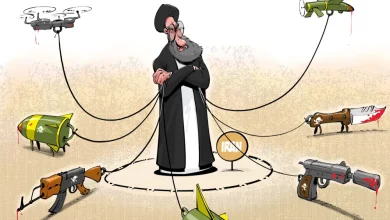
Through IRGC-linked banks and credit institutions, it facilitates money laundering, sanctions evasion, and financing of proxy militias abroad.
3. How the IRGC Exploits Sanctions
Sanctions meant to pressure the regime have often strengthened the IRGC’s hand:
• With legitimate foreign competitors gone, the IRGC fills the gap in imports, exports, and currency exchange.
• It monopolizes smuggling routes for luxury goods, food, and fuel.
• Sanctions create black markets—which the IRGC controls and profits from.
4. The Impact on Ordinary Iranians
While the IRGC enriches itself, citizens face:
• High inflation from economic mismanagement and black-market dependence.
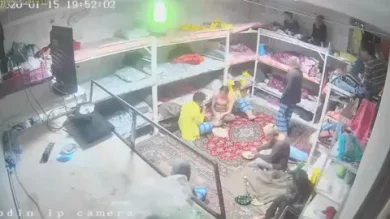
• Unemployment due to monopolies pushing out private businesses.
• Corruption in state contracts and tenders, blocking small entrepreneurs.
• Lower wages as IRGC companies underpay workers while funneling profits to military projects.
“In Iran, the economy isn’t just state-controlled—it’s Guard-controlled,” said Shirin, an economist in exile.
5. The IRGC’s Role in Corruption
The IRGC’s dominance fosters a culture of impunity:
• Officials tied to the Guard are rarely prosecuted for financial crimes.
• Billions in oil revenues disappear into unaccountable military budgets.
• IRGC commanders own luxury villas, overseas properties, and foreign bank accounts—while many Iranians struggle to afford basic goods.
6. International Connections: The Global Web
IRGC-linked companies operate far beyond Iran’s borders:
• In Europe: Shell firms purchase dual-use technology.
• In Asia: Front companies buy ship parts, electronics, and industrial machinery.
• In Africa & Latin America: Partnerships in mining, energy, and construction launder money and move goods.
These global operations give the IRGC access to foreign currency, assets, and influence.
7. The Human Cost: Stories from the Ground
• Ali, a factory worker in Isfahan, lost his job after his plant was taken over by an IRGC-owned company:
“They brought in their own people. We were left with nothing.”
• Mina, a shop owner in Shiraz, describes paying bribes to IRGC-linked inspectors to keep her business open:
“If you refuse, they’ll find a reason to shut you down.”
• Karim, a truck driver, says the Guard controls fuel distribution:
“We can’t get fuel without paying extra to middlemen tied to them.”
8. Why Terrorist Designation Matters
Designating the IRGC as a terrorist organization globally would:
• Freeze its overseas assets.
• Criminalize business with IRGC-linked entities.
• Strengthen legal cases against its leaders for human rights and financial crimes.
• Reduce its ability to fund proxy wars abroad.
Countries like the U.S., Canada, Bahrain, and Saudi Arabia have already acted—others, especially in Europe, have not.
9. How to Identify IRGC-Linked Companies
Signs include:
• Sudden ownership changes to unknown entities.
• Links to Khatam al-Anbiya or Mobin Trust Consortium.
• Leadership with military or Basij backgrounds.
• Involvement in both civilian and military contracts.
Resources such as sanctions lists from the U.S. Treasury and EU Council can help identify these companies.
10. What the International Community Can Do
• Expand designations to all IRGC entities, not just the Quds Force.
• Enforce sanctions more rigorously with better trade monitoring.
• Support investigative journalism to expose front companies.
• Empower the Iranian diaspora to share information and lobby governments.
Conclusion
The IRGC’s control over Iran’s economy is not just a domestic problem—it’s a global security issue. Every rial it earns through monopolies, smuggling, and corruption fuels repression at home and violence abroad.
Join Our Newsletter!
Stay informed with the latest updates, news, and ways to take action in the fight for justice and global security. Sign up now to get updates delivered straight to your inbox!