The Islamic Revolutionary Guard Corps (IRGC) isn’t just a military institution—it’s the backbone of the Islamic Republic’s authoritarian machinery. From suppressing protests in the streets of Iran to orchestrating proxy wars in the Middle East, the IRGC wields power far beyond its official title. Understanding who they are, what they do, and why it matters is essential not only for Iranians but for the world.
1. Birth of a Shadow Army
The IRGC was founded in 1979 by Ayatollah Khomeini to protect the revolution, not the nation. Unlike the regular army (Artesh), which was seen as loyal to the Shah, the IRGC was designed to enforce ideological loyalty and guard the Islamic Republic’s theocratic principles.
Initially a loosely organized militia, the IRGC rapidly grew into a sophisticated, sprawling force encompassing:
• Ground forces, navy, and air units
• Intelligence services
• The Quds Force (responsible for foreign operations)
• The Basij (a domestic paramilitary force)
• Economic and media arms
2. A Military Force with Global Reach
Today, the IRGC is not confined to Iran’s borders. Its Quds Force has played key roles in:
• Supporting Hezbollah in Lebanon
• Backing Bashar al-Assad in Syria
• Arming the Houthis in Yemen
• Training and funding Shia militias in Iraq
• Enabling Hamas in Gaza
These activities have earned the IRGC a reputation as a state sponsor of terror, culminating in its designation by the U.S. as a Foreign Terrorist Organization in 2019. Yet many countries still hesitate to follow suit, fearing diplomatic fallout or economic consequences.
3. Guardians of Repression at Home
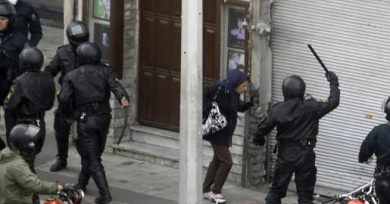
Inside Iran, the IRGC operates as the regime’s enforcer—crushing dissent and punishing anyone who threatens the status quo.
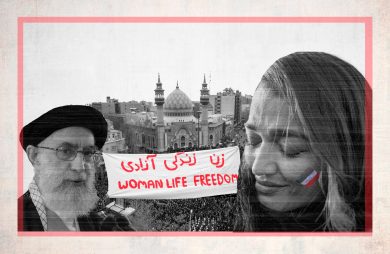
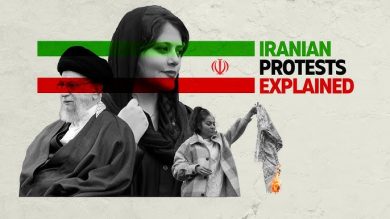
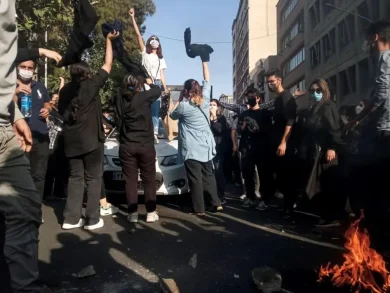
Through the Basij, it infiltrates schools, universities, and workplaces, surveilling citizens and silencing protest. During the 2009 Green Movement, 2017-2018 economic protests, and the 2022 Woman, Life, Freedom uprising, IRGC-linked forces arrested thousands, tortured detainees, and killed demonstrators.
Their tactics include:
• Mass surveillance and digital tracking
• Disinformation campaigns online
• Use of lethal force
• Show trials and forced confessions
For many Iranians, especially women, students, and ethnic minorities, the IRGC symbolizes the regime’s iron grip.
4. Iran’s Shadow Economy: Who Really Profits
Sanctions were meant to curb the regime’s abuses. Instead, they’ve allowed the IRGC to thrive. With access to black markets, smuggling networks, and state contracts, the Guards have built a multibillion-dollar empire.
They control or influence vast sectors, including:
• Oil and gas infrastructure
• Telecommunications
• Construction and engineering (via Khatam al-Anbiya)
• Pharmaceuticals and medical imports
• Front companies abroad
This economic stranglehold not only fuels their operations but also starves Iran’s private sector and concentrates wealth among regime elites.
5. The IRGC vs. Iran’s People
Why does the IRGC matter? Because it stands between the Iranian people and their freedom.
It blocks:
• Civil liberties through violence and surveillance
• Free markets through monopolization and corruption
• Justice through military courts and impunity
• Democracy by backing hardline political candidates
It wages war not just across borders but against Iran’s own citizens—particularly women, youth, artists, and journalists.
The IRGC’s existence ensures that no meaningful reform can occur without confronting its power.
6. Why the World Can’t Ignore This
Some in the international community view the IRGC as a “regional issue.” They’re wrong.
Here’s why it matters globally:
• Terrorism: The IRGC arms and funds groups that target civilians, including Westerners.
• Cyberattacks: Its hackers have targeted U.S.
infrastructure, European universities, and dissidents abroad.
• Diaspora intimidation: Iranian exiles in Canada, the UK, and Germany have been surveilled or threatened by IRGC proxies.
• Nuclear brinkmanship: The IRGC is closely linked to Iran’s ballistic missile program and nuclear ambitions.
Ignoring the IRGC enables impunity. Recognizing and isolating it cuts off the regime’s legs.
7. The Case for Terrorist Designation
Designating the IRGC as a terrorist entity is not symbolic—it’s strategic.
It enables:
• Sanctions on affiliated companies and individuals
• Criminal prosecution of IRGC agents operating abroad
• Asset seizures and restrictions on trade
• International cooperation to dismantle their networks
The European Parliament has already urged EU member states to do so. It’s time for democratic nations to act collectively.
8. Voices from the Ground: What Iranians Say
Ask Iranians about the IRGC, and you’ll hear fear—but also fury.
“They send our sons to die in Syria, while their kids live in Canada.”
—Student protester, Tehran
“They jail musicians, torture journalists, and then build shopping malls to look modern.”
—Exiled filmmaker, Istanbul
“We don’t want reforms. We want removal.”
—Women’s rights activist, Berlin
These voices make one thing clear: The IRGC is the regime.
9. How You Can Help
This is not just Iran’s problem. It’s a global human rights issue. Here’s how citizens everywhere can help:
• Demand your government designate the IRGC as a terrorist entity
• Support Iranian civil society through verified organizations
• Amplify voices from inside Iran
• Boycott IRGC-linked companies
• Educate others—share articles, podcasts, and testimony
Conclusion
The IRGC matters because it is the heartbeat of Iran’s dictatorship—and a global threat. But it is not invincible.
Across Iran, brave citizens rise against it. In the diaspora, activists expose it. Online, researchers map its empire. And together, the world can end its impunity.
Join Our Newsletter!
Stay informed with the latest updates, news, and ways to take action in the fight for justice and global security. Sign up now to get updates delivered straight to your inbox!