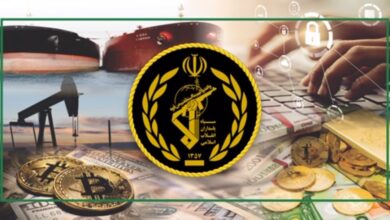
For more than four decades, the Islamic Revolutionary Guard Corps (IRGC) has been the most powerful institution in Iran—not just militarily, but politically, economically, and ideologically. It acts as a state within a state, controlling everything from oil pipelines to prisons, proxy armies to propaganda.
The question is not just if the IRGC will one day lose its grip, but what comes after. This report examines a realistic, evidence-based vision of Iran without the IRGC: how governance could shift, what reforms might be possible, and what challenges would remain.
1. Dismantling the IRGC’s Power Structure
1.1 Demilitarizing Politics
In a post-IRGC Iran, the armed forces would be brought fully under civilian control. The regular army (Artesh) would assume national defense duties, while a restructured police force—not a politicized militia like the Basij—would maintain internal order.
Immediate actions could include:
• Disbanding the Basij paramilitary
• Integrating non-criminal IRGC personnel into civilian jobs or the regular army
• Seizing IRGC-controlled weapons stockpiles
1.2 Ending Parallel Governance
The IRGC currently bypasses ministries by running its own “shadow government.” Removing it would allow elected officials to govern without interference from military commanders or unelected clerics.
2. Restoring Civilian Rule
2.1 Independent Institutions
Judges, parliamentarians, and provincial governors could operate without the IRGC’s intimidation. Free elections would be possible without candidate vetting by security forces.
2.2 New Political Space
Political exiles could return, new parties could form, and minority groups could advocate for their rights without fear of being branded “terrorists.”
3. Human Rights at the Core
3.1 Ending Political Repression
A post-IRGC Iran would have the opportunity to close notorious detention centers like Evin and Fashafuyeh, release political prisoners, and investigate past abuses.
3.2 Women’s Rights
With the IRGC and its morality police dismantled:
• Hijab laws could be repealed
• Gender-based legal restrictions could be lifted
• Women could participate fully in politics, law, and the economy
3.3 Freedom of Expression
Journalists, artists, and activists could work openly without surveillance or censorship.
4. Economic Transformation
4.1 Breaking the Monopoly
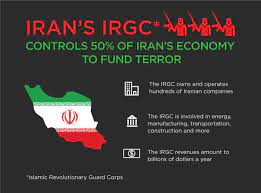
The IRGC controls vast sectors of Iran’s economy, from oil to construction to telecommunications. Post-IRGC reforms would:
• Privatize state-owned enterprises transparently
• Encourage competition and foreign investment
• Implement anti-corruption safeguards
4.2 Sanctions Relief
With a civilian-led, non-aggressive foreign policy, Iran could negotiate the lifting of sanctions, boosting exports, currency stability, and job creation.
5. Foreign Policy Reset
5.1 Ending Proxy Wars
Without the Quds Force funding and training militias abroad, Iran could focus on rebuilding its own infrastructure instead of fueling conflicts in Lebanon, Syria, Iraq, and Yemen.
5.2 Rebuilding Regional Trust
Iran could reestablish diplomatic relations on a basis of non-interference, opening opportunities for regional trade and security cooperation.
6. Transitional Justice
6.1 Accountability
A truth and reconciliation process could document IRGC crimes, from political assassinations to war crimes in Syria.
6.2 Restitution
Confiscated homes, businesses, and lands taken by IRGC-linked entities could be returned to rightful owners.
7. Cultural Renaissance
7.1 Reviving the Arts
Freed from censorship, Iran’s music, cinema, and literature could flourish domestically and internationally.
7.2 Diaspora Reconnection
Exiled Iranian artists, academics, and entrepreneurs could return, bringing global experience to a revitalized cultural and intellectual scene.
8. Challenges Ahead
A post-IRGC Iran would not be free of risk:
• Power vacuums could invite instability
• Hardline remnants may attempt sabotage
• Economic restructuring will be painful in the short term
However, with strong democratic institutions and international support, these challenges can be mitigated.
Conclusion
Removing the IRGC is not just about dismantling a military force—it’s about rebuilding a nation’s political soul. A post-IRGC Iran could be democratic, inclusive, and peaceful, but only if justice, transparency, and human rights are made non-negotiable.
Join Our Newsletter!
Stay informed with the latest updates, news, and ways to take action in the fight for justice and global security. Sign up now to get updates delivered straight to your inbox!